Upload an image of churches, old buildings, stained glass, stone carvings, or religious art. Our AI interprets the Christian symbolism hidden within.
Drop your image here or click to browse
JPEG, PNG, GIF, WEBP (max 10MB)
Interpreting sacred symbols...
Something went wrong
Upload a photo of sacred architecture, stained glass, or religious artwork.
Claude AI identifies symbols and matches them against our curated database.
Receive a detailed theological interpretation with scriptural references.
A real output from the system. No editing, no cherry-picking.
A curated collection of 470+ Christian symbols
Rome's instrument of maximum shame, transformed into Christianity's sign of victory. Christus Victor over death itself.
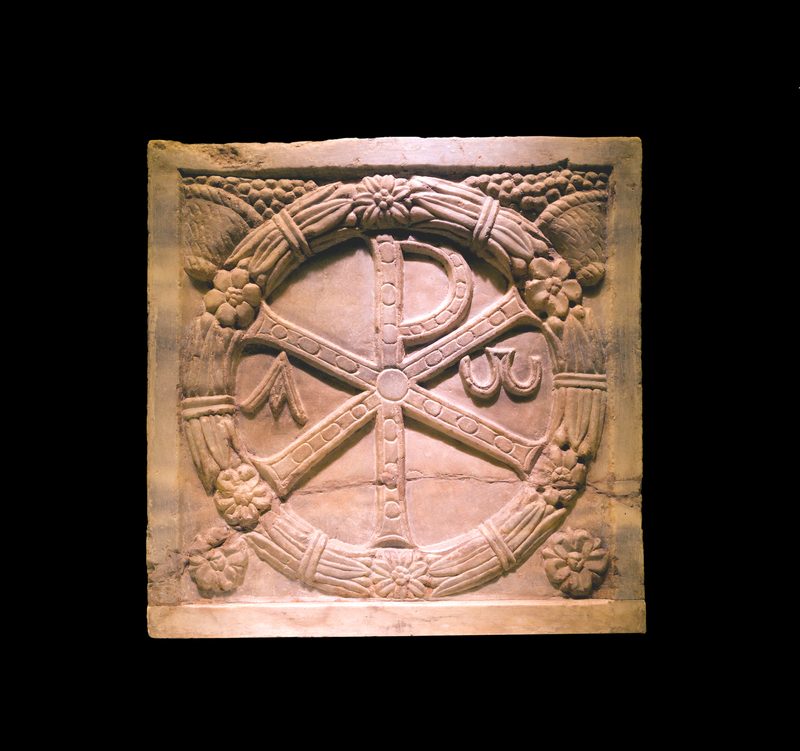
First two letters of ΧΡΙΣΤΟΣ in Greek. Found in pre-Constantinian catacombs, centuries before the Labarum.
Two interlocking triangles: heaven descending, earth ascending. The Incarnation in geometry. A Christian symbol for 1,500 years before its modern association.
The earliest Christians disguised the cross as an anchor in the Roman catacombs. A symbol of hope in Christ: "an anchor for the soul" (Hebrews 6:19).
The Crown of Thorns inverted into the Crown of Glory. From mockery to majesty: "Be faithful unto death, and I will give you the crown of life" (Revelation 2:10).
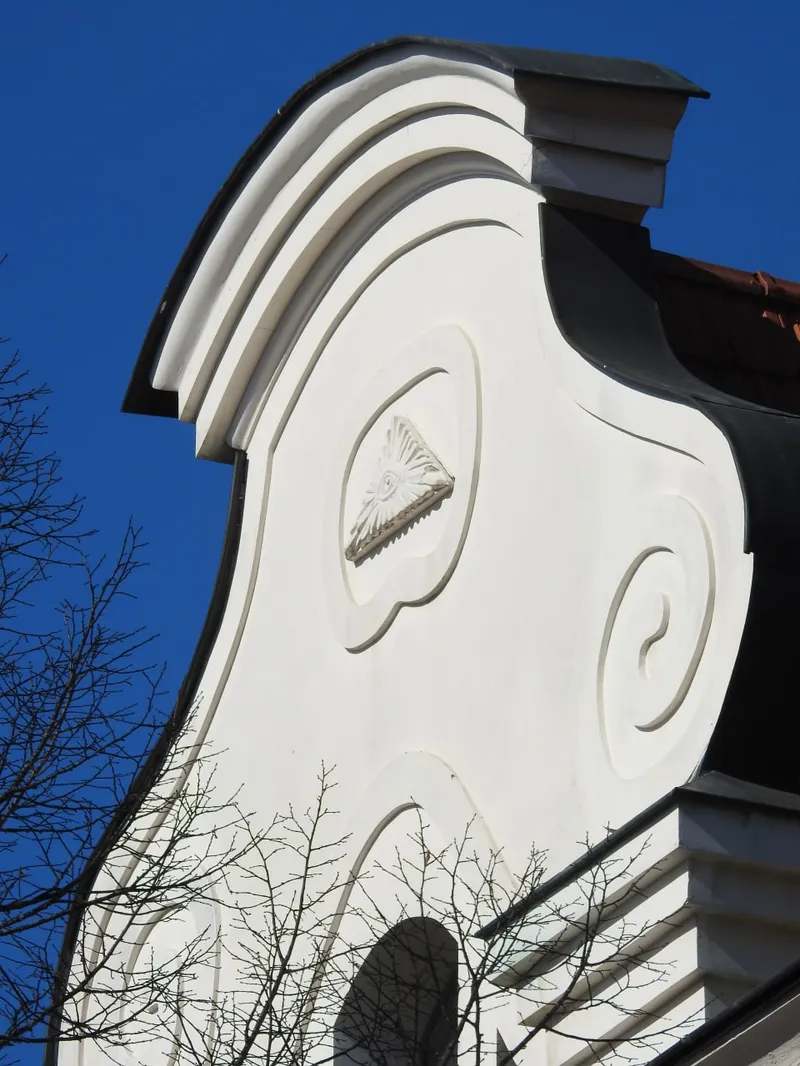
The radiant eye within the equilateral triangle first appears in Renaissance church art (Pontormo, 1525). The triangle is the Trinity; the eye is Proverbs 15:3: "The eyes of the LORD are in every place." Found on baroque church ceilings from Salzburg to Rome, decades before its adoption on the Great Seal (1782). Not Masonic in origin, but patristic.
The oldest secret sign of the Christians. IXTHYS: Iesous Christos Theou Yios Soter. Drawn in sand as a recognition sign under persecution. Christ called fishers to become fishers of men (Matthew 4:19) and fed thousands with fish and bread. The fish swims against the current, like the faithful in the world.
At Christ's baptism the Holy Spirit descended "like a dove" (Matthew 3:16). Noah's dove brought the olive branch as a sign of the new covenant after the Flood (Genesis 8:11). The most frequent catacomb symbol alongside the fish. Seven doves for the seven gifts of the Spirit on Romanesque baptismal fonts.
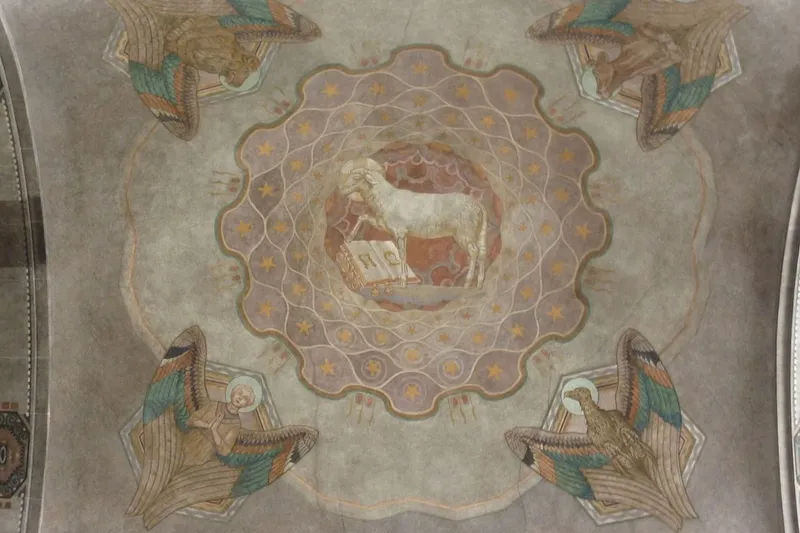
"Behold, the Lamb of God, who takes away the sin of the world" (John 1:29). From the Passover lamb in Egypt (Exodus 12) to the slain Lamb on the throne (Revelation 5:6), the scarlet thread of redemption runs through all of Scripture. Often depicted with a victory banner on church keystones.
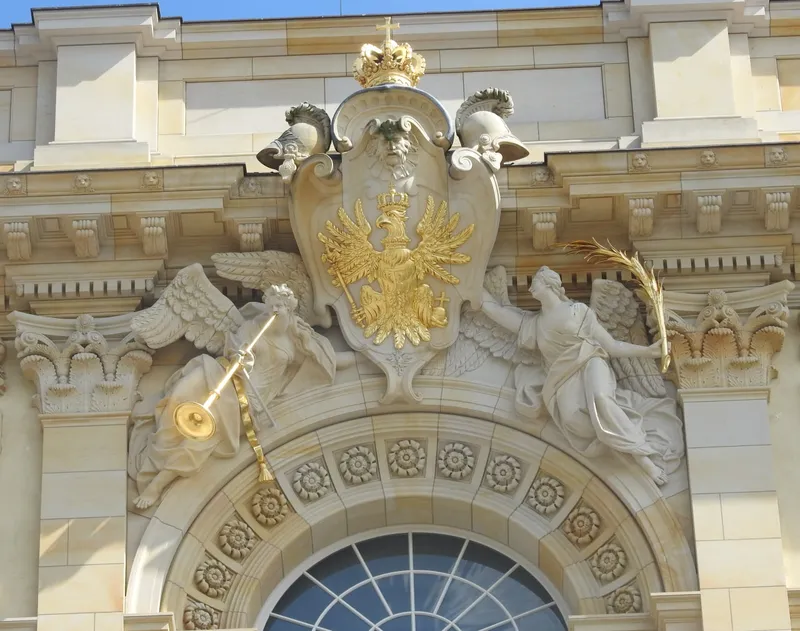
Symbol of St. John the Evangelist, whose Gospel soars to the highest theology. "They who wait upon the LORD shall mount up with wings as eagles" (Isaiah 40:31). The lectern eagle in churches holds the Word of God. On Romanesque tympana, the eagle defeats the serpent: heaven conquers evil.
Moses lifted the bronze serpent on a pole in the wilderness so that all who looked upon it would live (Numbers 21:8-9). Christ applied this image directly to His own crucifixion: "As Moses lifted up the serpent, so must the Son of Man be lifted up" (John 3:14).
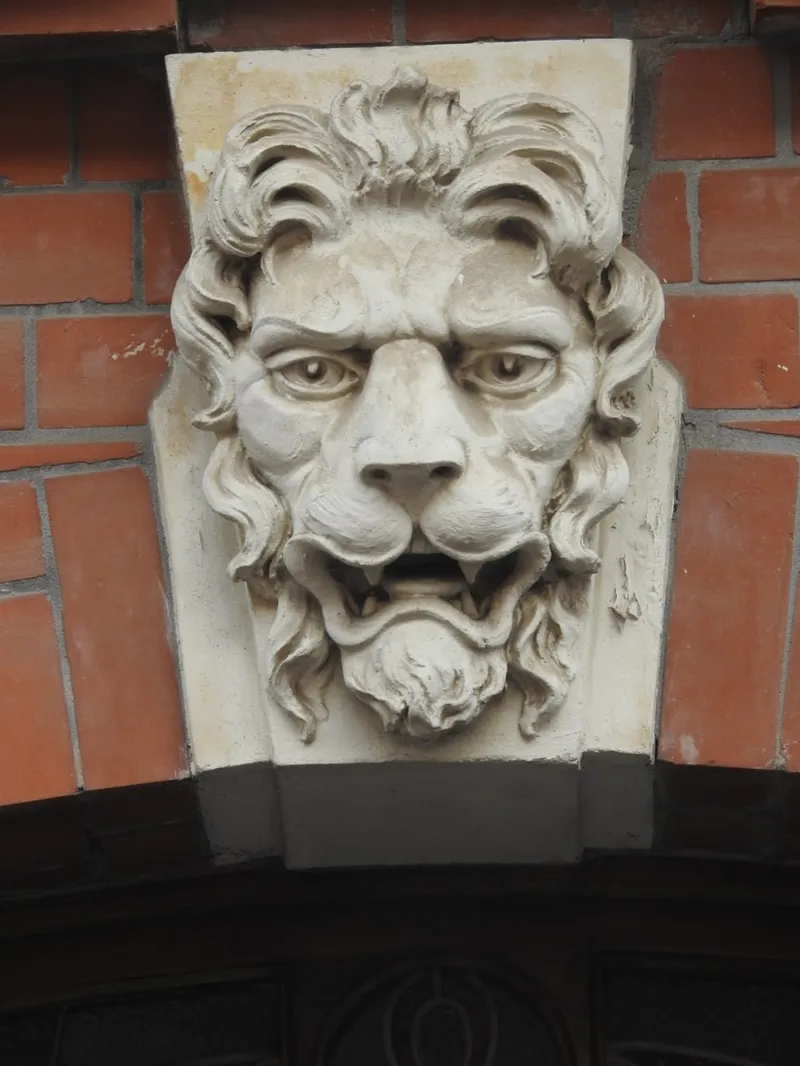
The Lion of Christ (Revelation 5:5). Symbol of St. Mark the Evangelist. Guardian of church portals across Romanesque Europe, representing Christ's royal authority and resurrection power.
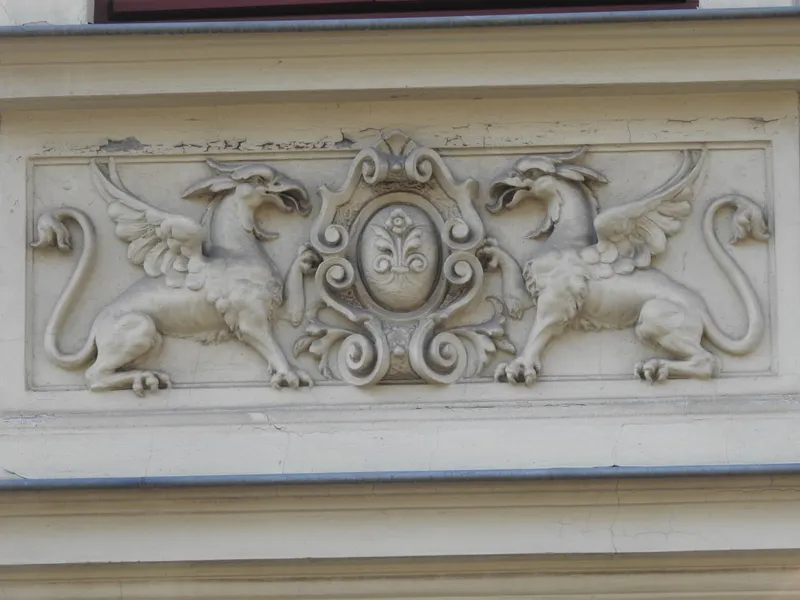
Eagle head and lion body: heaven united with earth. Medieval Christians read the griffin as Christ, divine and human in one nature. Carved on cathedral capitals from Ravenna to Chartres.
Four-faced guardians of God's throne (Ezekiel 1:10). Man, lion, ox, eagle: the four Gospels in patristic tradition. Carved atop the Ark of the Covenant, their wings overshadowing the Mercy Seat.
The equilateral triangle: three equal sides, one shape. Found in church architecture since the 12th century. Three persons, one God, co-equal and co-eternal. Often combined with the Triquetra or Borromean rings.
Every church window, every stone carving on an old building, every geometric proportion encodes a theological argument. But that visual language has been largely forgotten. SacredLens gives it back. The interpretation is grounded in a hand-curated database of 470+ Christian symbols, cross-referenced with Scripture. The AI does not guess. It only speaks to what is visibly present.
Claude Vision identifies and describes every visible symbol, figure, and architectural element in your image with precision.
470+ Christian symbols with detailed theological significance, scriptural references, and historical context.
Strict protocol ensures interpretations are grounded only in what's actually visible. No guessing, no fabrication.
Previously analyzed images return results in under 100ms. Perceptual hashing ensures even resized images hit the cache.
Photos of churches, cathedrals, old buildings, stained glass windows, stone carvings, mosaics, altar pieces, and any architecture featuring Christian symbols. Both exterior and interior shots work well.
Claude AI Vision analyzes your image and identifies visible symbols, figures, and architectural elements. These are then matched against a hand-curated database of 470+ Christian symbols with theological significance and scriptural references.
Yes. Anyone can use SacredLens for 1 analysis per day without signing up. Create a free account for 3 per day. Upgrade to PRO for 10 per day or Scholar for 30 per day.
SacredLens supports 15 languages: English, German, Spanish, French, Italian, Portuguese, Dutch, Polish, Russian, Japanese, Korean, Chinese, Arabic, Turkish, and Hindi.
Interpretations are grounded in a curated symbol database with scriptural cross-references. The AI only interprets what is visibly present in the image and does not fabricate or guess. The system uses a strict anti-hallucination protocol.